
Fair Play and Community Life: Grassroots Sport as a Safe Space to Break Down Social Stigma
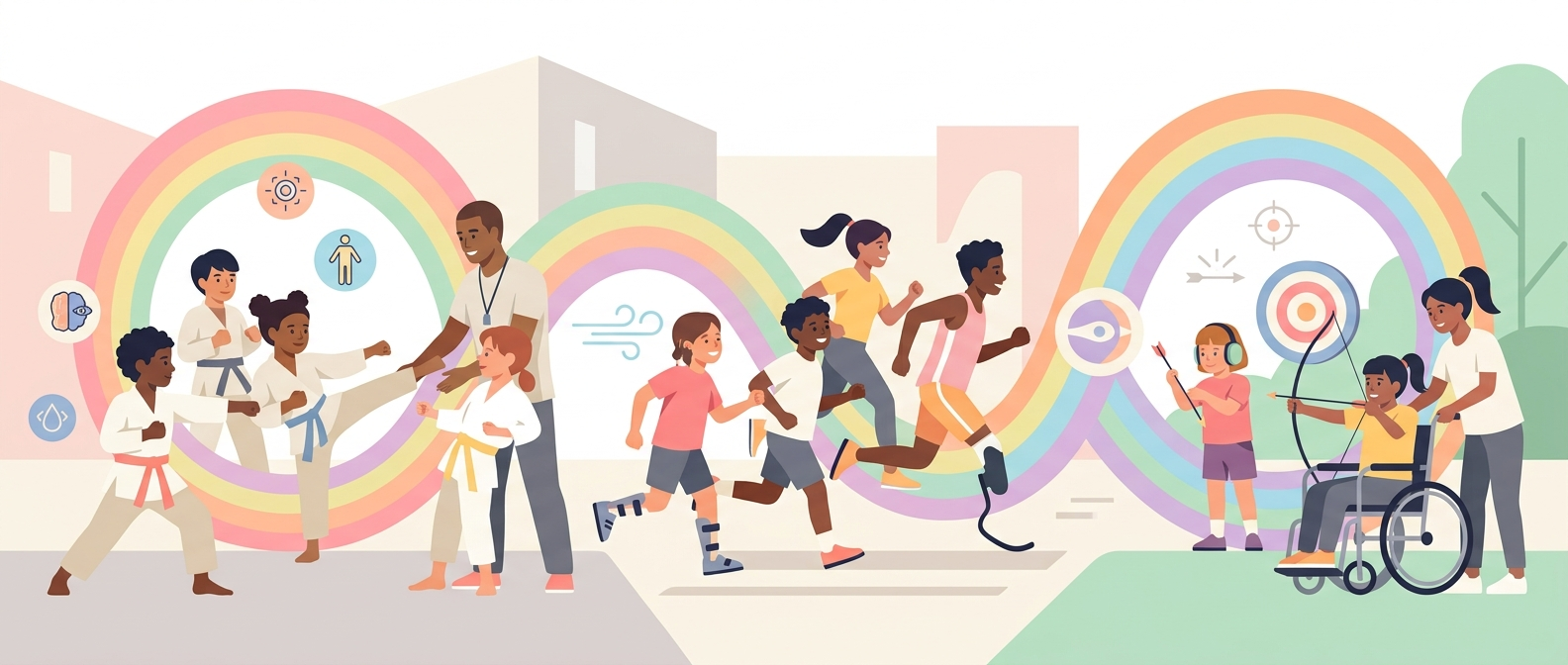
For generations, sport has been much more than competition. On a field, in a park, or at a sports school, people learn rules, build friendships, and discover ways of living alongside people who are different from them. When sport is geared toward holistic development rather than performance alone, it can become a powerful setting for strengthening respect, empathy, and social inclusion.
However, this potential doesn't happen on its own. Sport can be a place where people come together, but it can also reproduce discrimination and exclusion when there are no clear values, guidance, and rules. That is why talking about fair play and community life means talking about how to build safe environments that help break down stigma and foster fairer relationships between people.
What do we mean by developmental sport?
Developmental sport is sport that puts human development ahead of competitive results. Its purpose is not only to win, but to strengthen social, emotional, and ethical skills such as cooperation, respect, discipline, and the peaceful resolution of conflict.
UNESCO recognizes that quality sport and physical education contribute to the holistic development of children and young people, supporting inclusion, health, and social cohesion (UNESCO, 2015). From this perspective, training also means learning to live together.
In these spaces, cultural, social, economic, or physical differences stop being barriers and become opportunities to learn. Sharing goals, respecting common rules, and working as a team create positive experiences of interaction that help challenge prejudice and stereotypes.
Fair play: a practice that goes beyond the rules
When people talk about fair play, many think only of following the rules of the game. But the concept includes broader values: honesty, solidarity, equality, respect for opponents, and collective responsibility. The Council of Europe defines fair play as a way of behaving that embodies friendship, respect, and sporting spirit, rejecting practices such as violence, doping, discrimination, or any form of exclusion (Council of Europe, 2021).
In other words, fair play doesn't just teach us how to compete; it teaches us how to live together.
How can sport help break down stigma?
Research in social psychology has shown that prejudice can decrease when people from different groups interact on equal terms, share common goals, and cooperate with one another. The idea isn't new: in 1954, Gordon Allport proposed that positive contact between people from different groups could help reduce prejudice.
Since then, this idea has been widely studied and refined. A study published in 2023, which pooled data from 34 studies and more than 63,000 participants across 19 countries, found that intergroup contact was consistently associated with lower levels of prejudice and more positive attitudes toward other groups (Van Assche et al., 2023).
Developmental sport can bring together exactly these conditions:
- People from different backgrounds take part in shared activities.
- Common goals are built.
- There are rules that promote respect.
- Relationships based on cooperation are strengthened.
Several studies have found that well-designed sports programs can help improve community relations, increase a sense of belonging, and encourage more positive attitudes toward historically excluded groups. However, these studies also note that the results depend on factors such as the quality of the educational approach, coach training, and family involvement (Spaaij, 2012; Holt et al., 2017).
It's important to stress that sport, on its own, does not eliminate discrimination. What drives change are experiences of respectful interaction and the safe environments built around sport.
What makes a sports environment truly safe?
The evidence shows that sports programs achieve better results when certain conditions are in place:
- Coaches trained in values and inclusion. Coaches have a decisive influence. Beyond teaching technique, they can promote respect, step in when discrimination occurs, and strengthen teamwork.
- Family involvement. When families support a culture of respect and coexistence, what is learned on the field is reinforced off it.
- Clear rules and participation. Spaces where rules are built collectively tend to foster greater commitment and a stronger sense of belonging.
- Diversity and equal opportunity. Inclusion requires guaranteeing access, removing barriers, and valuing difference as something that enriches the sporting experience.
Sport as a tool for building community
Beyond results on the scoreboard, developmental sports spaces can connect people, strengthen bonds, and build trust between different social groups.
A team that learns to respect differences is rehearsing ways of living together that can extend to school, the neighborhood, and society. In that sense, sport can be understood as an everyday laboratory for citizenship: a place where values are practiced and then carried into other areas of life.
The challenge is to move from the assumption that sport is automatically inclusive to the conviction that inclusion must be built intentionally, consciously, and continuously.
Because the real victory doesn't come only from winning a match, but when a community learns to live together, to respect one another, and to recognize that diversity is one of its greatest strengths.
References
-
Allport, G. W. (1954). The Nature of Prejudice. Cambridge, MA: Addison-Wesley.
-
Council of Europe. (2021). European Sports Charter. Strasbourg: Council of Europe.
-
UNESCO. (2015). Quality Physical Education (QPE): Guidelines for Policy-Makers. Paris: UNESCO.
-
UNESCO. (2021). Fit for Life Global Sport Alliance. Paris: UNESCO.